
Making "dangerous" documentaries about CEOs, scammers, and extremists
Oscar-nominated filmmaker JED ROTHSTEIN on interviewing jihadists, his hit WeWork doc, and the hazards of making films that speak truth to power in 2026
Underexposed is a weekly ad-free film publication celebrating great underseen cinema and moviegoing culture. Paid subscribers get exclusive essays, videos, and more - while supporting the future of movie culture.
In March of 2025, MTV Documentary Films acquired David Osit’s Predators, a film chronicling the rise and fall of NBC’s controversial series “To Catch a Predator.” Predators was released last fall to near-universal acclaim. Then, a few weeks ago, Osit took to Instagram with some sad news:
“After Paramount’s acquisition by Skydance, every single employee at MTV Documentary Films has left, been reassigned or terminated. In effect, MTV Documentary Films no longer exists. Predators was their final film.”
This was just the latest domino to fall in the ever-shrinking marketplace for documentaries, a sector that was thriving only a few years ago. With the rise of streamers in the 2010s, docs proliferated as a popular (and cost-effective) category of “content.” The best of them exposed systemic abuse, cleared or condemned people in the court of public opinion, and even prompted actual policy changes.
But since the pandemic, streamers have started making cutbacks, pruning their documentary divisions to the stump. Meanwhile, media consolidation and the rise of authoritarianism has soured streamers’ appetites for potentially controversial topics. Instead, many have pivoted to glossy celebrity docs, gruesome true crime series, and state-sanctioned puff pieces. “Something weird is happening in the world of documentaries. Money, and control are reshaping the stories you see - and don’t see,” National Geographic filmmaker Austin Meyer recently warned on his YouTube channel.
“If Paramount merges with Warner Bros. Discovery, it’s very safe to assume that documentary filmmaking will continue to be disenfranchised — and ultimately ended.” - David Osit
To discuss the current state of documentary filmmaking, I reached out to Jed Rothstein, the Oscar-nominated filmmaker behind Killing In The Name (2010), The China Hustle (2018), and WeWork: Or The Making and Breaking of a $47 Billion Unicorn (2021). You can watch the full conversation on Youtube here, or read a condensed version below.
News Reel
After Paramount Axed MTV Documentary, What's Next? Hat tip to Anthony Kaufman, who’s been covering the demise of MTV Documentary Films this week both on Substack and over at IDA. Subscribe to Anthony’s Substack - it’s terrific.
What is the Cannes Film Festival trying to preserve? I thoroughly enjoyed this juicy dispatch from this year’s Cannes Film Festival, courtesy Sophie’s That Final Scene and written by correspondent Dan Schindel.
The Letterboxd Crowdfunding Campaign is now live! Earlier this month, Ted Hope and Elizabeth Joyce of Intrinsic Entertainment Collaborative announced an exciting plan to buy Letterboxd and turn it into a community-owned business: “We live in a world where business interests currently trump the people’s interest. We can turn this around though, and folks are recognizing that we have to if we want to protect the good things in life and this world.” Check out the Seed and Spark page here.
“I also long to be fictional.” The wonderful Mo_Diggs featured my celeb essay Twilight of the Gods in his recent stint as curator on The Substack Post. Welcome to all new subscribers!
And now, this week’s Underexposed Movie Pick:
The China Hustle (2018, Jed Rothstein)
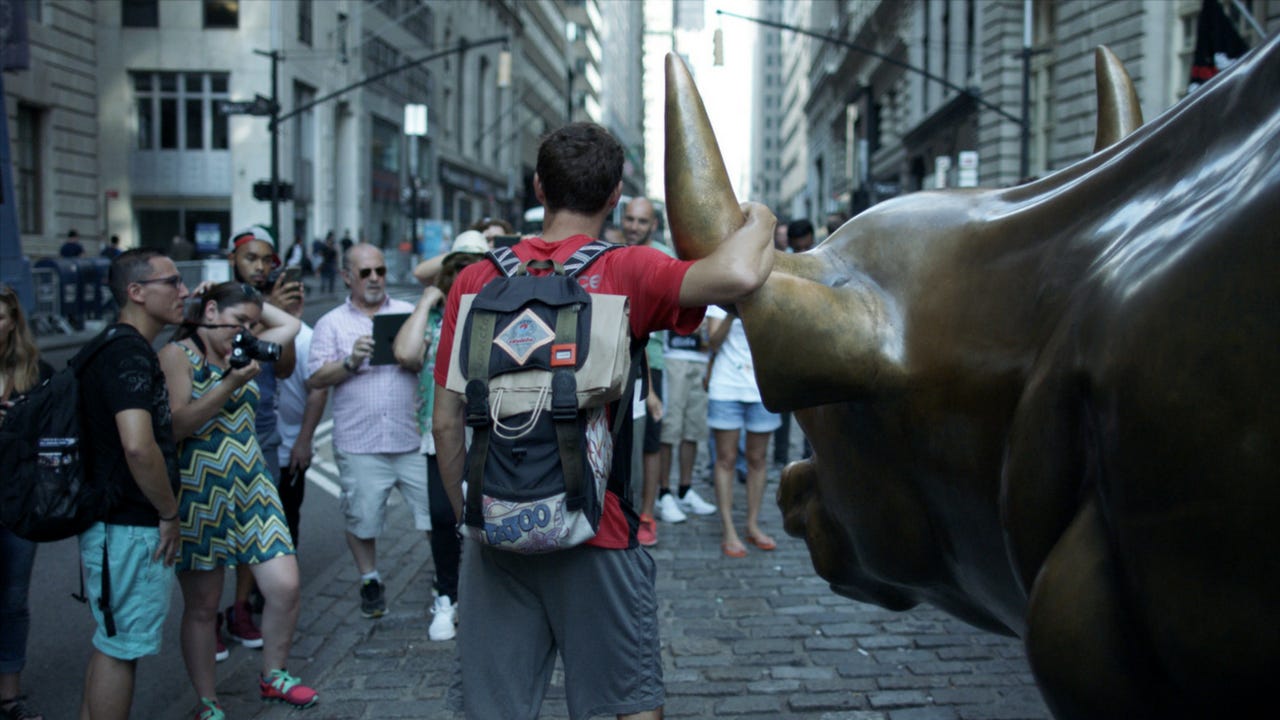
“It had this combination of extreme complexity, which was a filmmaking challenge, and great characters, which is a gift.” - Jed Rothstein
A Wall Street heist story that Forbes called “the most important film of 2018,” The China Hustle follows investors chasing outsized returns in China’s booming markets. But when whistleblower Dan David uncovers evidence that fraudulent Chinese companies were stealing billions of dollars from U.S. investors and retirees, the entire system comes under scrutiny. Read more about The China Hustle in the interview below.
Where to watch The China Hustle
Now streaming for free (with ads) on YouTube.
“We have to think up new ways of getting our stories out there. To some extent, we might have to be open to new ways of telling them.”
An interview with Oscar-nominated director Jed Rothstein
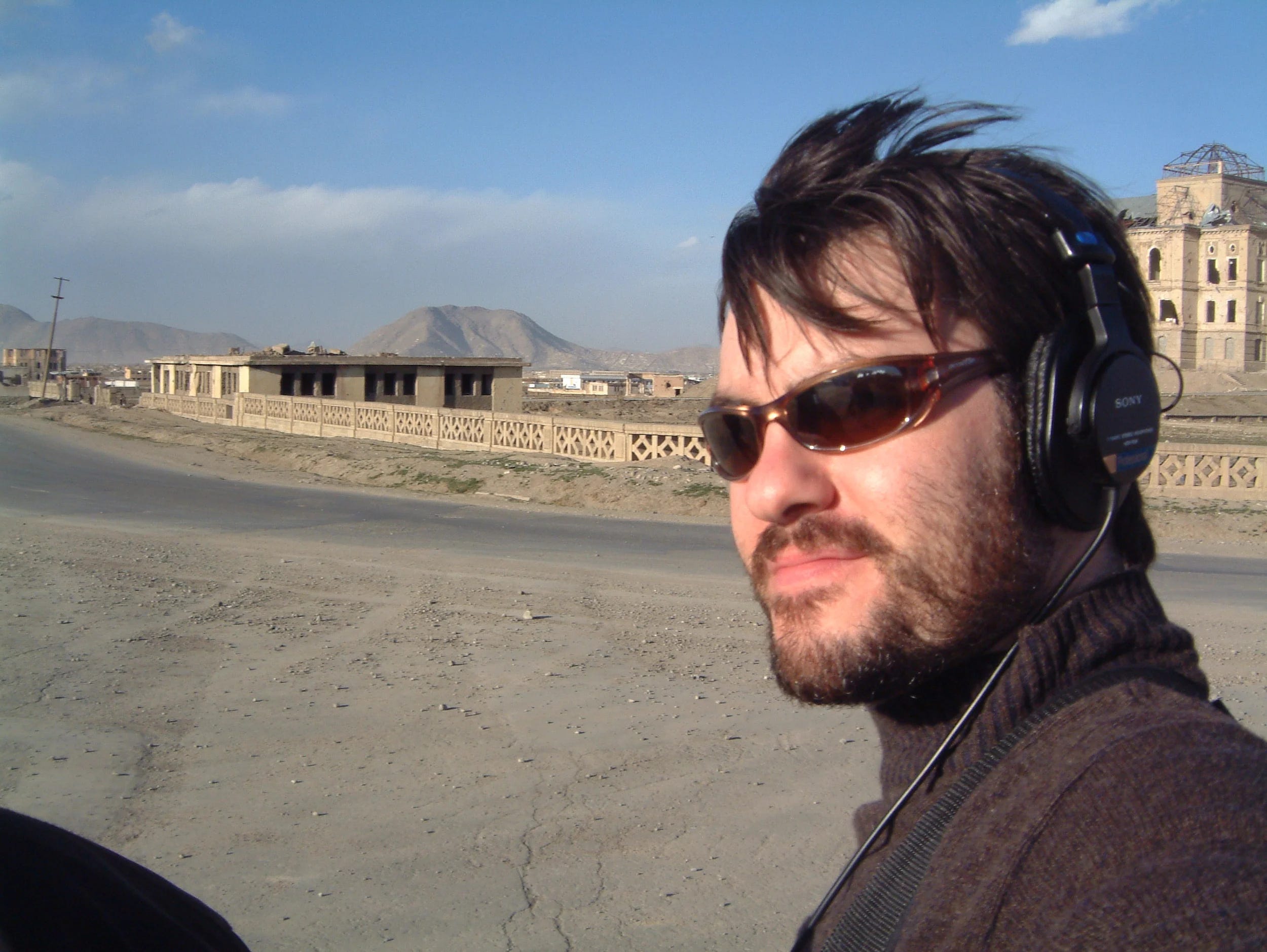
Alex Rollins Berg: Jed, welcome to Underexposed.
Jed Rothstein: Thanks, Alex. Very happy to be here.
Alex Rollins Berg: Tell me about how you got interested in documentary film or film in general. Give us your origin story.
Jed Rothstein: I had studied anthropology in college, and through that got into ethnographic film and really loved the process of meeting new people and working with teams to put something together. I think project-based work is really good for me because I don’t get distracted [or] bored - there’s different things you have to do at each stage.
When I finished college, I thought, “Making films about real people is great, but it’s so hard. Maybe I’ll try making stories, making fiction films.” And I actually went to film school for about a year and a half. I moved out here to New York to go to Columbia to study fiction film. And after going about halfway through film school, I realized actually I like docs better. I got an internship and then a job with a documentary company that took me immediately all around the world. I ended up filming in 30 different countries. And I’ve been doing that ever since. I’ve always loved this backstage pass to so many different worlds that filmmaking gives us.
Alex Rollins Berg: Do you remember those first documentaries that you encountered that really inspired you, that sparked your interest in this field?
Jed Rothstein: Of course. The Thin Blue Line was something, when I was younger. I found it fascinating to look at a story and understand the question of “what is truth, how do we get to the truth,” and when and how should we question the assumptions that we have or that we’re told? I was always attracted to the journalistic side of it. And I, of course, was attracted to the cinematic side of it. In college, I really got into Jean Rouch, who was a French documentarian. He made a wonderful film called Chronicle of a Summer, which followed a bunch of émigrés and refugees in the summer of 1960 in Paris. It was really fascinating and probing, and made me think about that city and French history in a different way.
One of the nice, interesting things about my film school was that it was founded by Miloš Forman, who came from the Czech Republic, or what was then Czechoslovakia. He brought over a lot of these professors who had grown up working behind the Iron Curtain. And they had these marvelous films that were always allegories because they had to pass them through the censors.
So they made films that, if you knew what you were looking at, you understood what they’re talking about; the censors didn’t understand it. And strangely, I almost feel like that skill is really useful today. We don’t have the same kind of censorship that they had, but I do feel like there’s an increasingly tight and small range of things that the oligarchs who make decisions about the big media companies are willing to put on the air nowadays.
So we have to find ways to tell stories that sort of go a level deeper. It’s an interesting skill, and an interesting challenge. It’s kind of sad to have to do it here, but from a craft perspective, there’s something interesting to it.
Alex Rollins Berg: Absolutely. The Firemen’s Ball is one of my favorites. It is such a tale.
Jed Rothstein: Right.
Alex Rollins Berg: We all think of documentary as being completely explicit about its themes and subject matters. I wonder if studying fiction films brought anything to your process that maybe going straight into documentary filmmaking wouldn’t have provided?
Jed Rothstein: Yeah, I think I learned a lot about how to create scenes, how to use the tools of cinema to tell stories visually. It’s really helped me. For a while, I did verité films, that’s an amazing art - almost like a dance. So much physical presence and agility is required, and I love doing that. But then, after my son was born, and I had done a bunch of films in conflict zones and really dangerous places, my wife was like, Basta on that.
I started making films that were a little more built and structured and less dangerous to make, probably. Those skills really became helpful in finding ways to help visualize and tell stories when there isn’t necessarily material to do it. I think you don’t want to just have people sitting in chairs talking to you. So when you want to build a 360 degree scene, how do you use the tools of cinema? I always like to combine. I always like to think that the archival material, recreated material, graphics, documents, all of these things can be woven together to give the viewer an experience. And I don’t really want to privilege one of those forms over the other, or feel too much of a distinction to separate them. That skill is something that I really picked up more of in making fiction work for a while.
Alex Rollins Berg: Speaking of making dangerous films, I have to ask you about your 2010 film, the short that was nominated for an Academy Award, Killing In The Name, in which you filmed both Al-Qaeda terrorists and their victims. Tell us about how you put that together, and what it was like to get that level of exposure.
Jed Rothstein: It was an extraordinary journey. And it’s all about a man named Ashraf al-Khalid. He and his wife’s wedding was blown up by a branch of Al-Qaeda in the Arabian Peninsula. They lost 27 of their close family and friends. Ashraf wanted to start a dialogue with the groups and people that had done this, and talk about resolving differences peacefully. At that time especially, he was concerned with Muslims killing other Muslims. I followed him around the world doing that. And he is a very inspiring and powerful force, and was really willing to get into discussions and disagreements with anybody. I think he got a lot of people to think differently.
There were a couple people that wouldn’t talk to him. One was this fellow named Zaid, who was a recruiter for Al-Qaeda. He wouldn’t talk to Ashraf, but he spoke to me, and that was really one of the most fascinating and scary interviews I ever did. My team had to go to great lengths to secure that interview, and we had to do it in a secret location that was under wraps till the last minute.
He came with a minder who was a very scary-looking fellow. What was really interesting is he was very honest about stuff, and I could see how he was so compelling. When he told me that he could take a middle class, secular-minded, cosmopolitan young Jordanian, and convert him in a few weeks to be willing to drive an ambulance packed with explosives into a market full of people, it was pretty chilling. I knew that he had succeeded in doing that a number of times. So it was a fascinating and harrowing film to make. But I’m proud that we did it, and I’m proud that we got to tell our short story. And then going through the process of, you know, being nominated and all that stuff, was exciting.
Alex Rollins Berg: How did that change your life?
Jed Rothstein: It’s so much fun as a documentarian. The film was picked up by HBO, so they treated us very well, and funded our campaign, which is an expensive thing to do. And it’s hard for independent films to do.
I actually missed a lot of it because I was filming my next film, which was called Before the Spring: After the Fall, about young Egyptian rock musicians before, during, and after the Tahrir Square revolution. And so when I got a call to go to this Oscar brunch, I was actually in Tahrir Square.
Then I came back and had this week or ten days in Los Angeles, where you’re shuttled around from one fancy event to another. For my wife and I, we kind of got to be in this little bubble of celebrity, but you’d arrive somewhere and there would be paparazzi always taking pictures, and then when they realized that you’re the documentary people, they’re like, “Oh, no, we’re sorry. We thought you were someone else.” So you kind of got to see the inside of this celebrity world without really being in it.
It certainly is helpful to be able to be Oscar nominated. But, you know, in a lot of ways, I just kept on doing what I was doing. And, as a friend of mine told me, you think you come back from that and the phone just starts ringing all the time. But it doesn’t necessarily for documentaries, especially social issue documentaries that are hard to make. They’re hard to finance. It definitely helps to have that acknowledgment, but it doesn’t necessarily change that fundamental dynamic.
Alex Rollins Berg: We’ll certainly talk more about that in a minute. But I wanted to first ask you about your film The China Hustle, which came on my radar because it stars a family friend of ours, Herb Greenberg, a financial journalist that you interview. I watched it last week, it’s excellent. I want to know how this story came across your radar, and how you developed it.
Jed Rothstein: I ended up going to work at Jigsaw, Alex Gibney’s company, he was a great mentor. I directed some television episodes there and did well with it. And then a film project came through, which ended up becoming The China Hustle. It came into Jigsaw, and Alex couldn’t direct it. As per usual, he was probably doing five things; he’s always very busy. They said, “Well, we have a couple of young directors in our group here. Would you like to meet with some of them?” And so I met with Sarah Gibson, who was the main producer. We hit it off, and she said, “The last step before we give you this project is you have to meet Dan” - Dan David, who is the main character.
So Dan arranged to meet me in a T.G.I. Fridays in Penn Station at, like, 2:00 on a Sunday. And we talked for two or three hours, and we were off to the races. It was an incredible journey to be on because it had this combination of extreme complexity, which was a filmmaking challenge, and great characters, which is a gift.
Alex Rollins Berg: Yeah. And there’s a little bit of shared DNA with WeWork, which I want to pivot to now. Tell me about how that came to you, what kind of access you had.
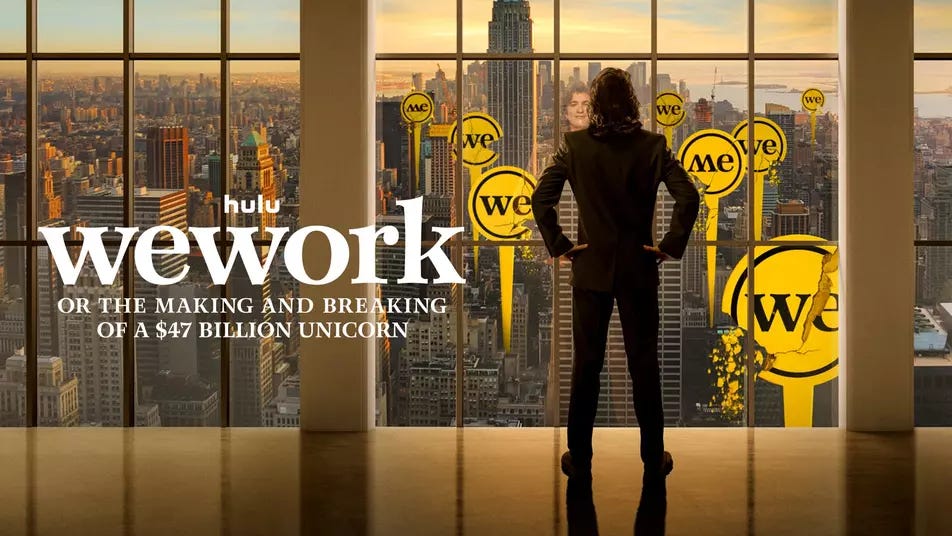
Jed Rothstein: I’d been following WeWork as a company a little bit, and I followed Adam [Neumann’s] troubles. I thought this could be a great story because there’s this aspiration for hope and something bigger, and then there’s this dark underbelly of greed. And I wondered what went on inside there. I had known some people that worked in them and that worked at WeWork here in New York at the corporate headquarters. I called up my agent and said, “Hey, I want to do this film. Will you get me in touch with these guys?” And she did it.
I ended up becoming quite close with Ross Dinerstein, the head of Campfire, and we decided to make this film together. We met on March 5th, 2020, here in New York. Ross flew home to LA, he got Covid and gave it to his whole family. And then the world shut down. But we had decided to make this film, and we actually started making it in April 2020 under very unusual circumstances.
The process of making the film was kind of amazing because I got to come out of this hibernation that we were all in in the summer, when we started filming. The film was about young people searching for community in the wake of a financial crisis, in the wake of the changing world of business. WeWork offered an opportunity for people to come together, both in terms of the what it offered its clients, but more importantly, what it offered the people who came to work there. And a lot of people really felt like, I think Adam sold them on the idea that they were going to change the world, and they felt a sense of community in doing that, and that’s what gives the film its heart. They believed in what they were doing, and they felt a sense of higher purpose. When that purpose was betrayed by Adam later in the story, you really feel it because it wasn’t just about a job or a way to make money, it was a way to create a new community. And it turned out that there were some untruths to that.
But the process of making that during the pandemic was really moving because we were living in this time of apartness, and I really sympathized with and understood why people wanted to create this sense of community.
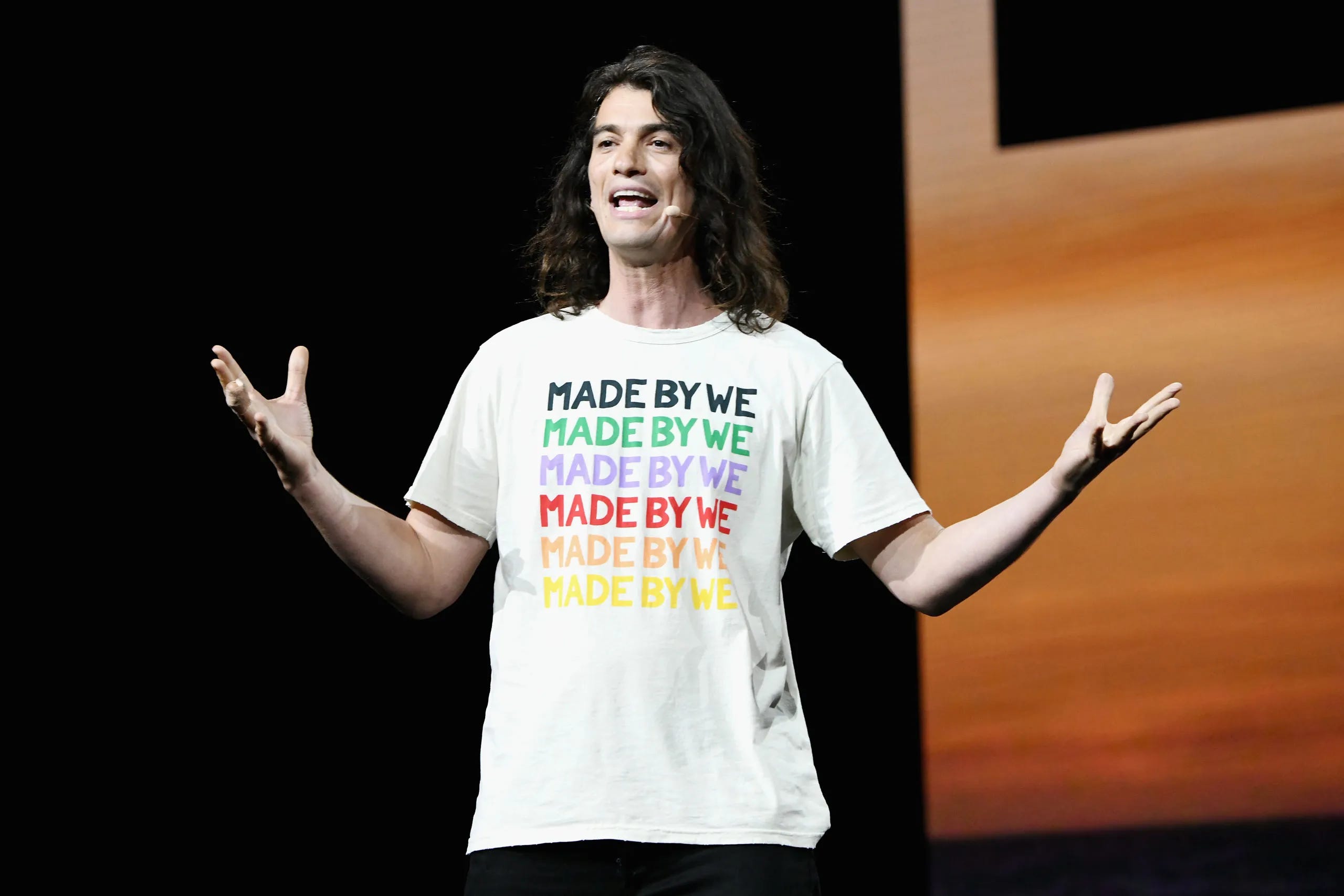
Another thing about that film is we tried and tried to speak with Adam. We spoke to many of his friends, cousins, and ultimately his PR representative, a man in Israel. But Adam had a lot of litigation going on over WeWork, and so at the end of the day, he couldn’t talk.
But I knew that WeWork filmed everything. I knew that everybody there filmed everything and put it on social media. Gathering these bits of archival footage - mostly amateur shot, and some professionally shot - and finding a mechanism to use that legally was something that I knew we had to set up. And I actually learned a lot from Jigsaw and Alex. They had set up this double blind process where people could put stuff in a drop box anonymously. So if there were people that had material, but they didn’t want to be known and we didn’t necessarily want to know who they were either, we could get it.
Alex Rollins Berg: Both the We Work doc and China Hustle speak to the reality we’ve been living in since the 2008 financial crisis. We do need to build community, and false fintech prophets keep coming into our lives and making these big promises, and then betraying them. Now, on the precipice of another potential financial crisis, is there any way to break this cycle?
Jed Rothstein: That’s a good question. And some of those questions are above my pay grade. I just saw Carson Block, who is one of the main a main character in China Hustle, was on Bloomberg today, and he was talking about shorting various exchange traded funds - it was a very technical conversation. I was watching him and I was like, “What are you saying, Carson?” I got the impression he thinks there’s going to be some kind of massive market correction, and he was betting on that in these with these financial instruments.
I don’t think we can get away from exuberance. I think we can move towards more fairness, and we can move towards systems that create a form of capitalism that is more beneficial to everyone. It seems like we have skewed the entire system towards the top, and we’ve removed the guardrails that protected the everyman. I think that’s a mistake, and I hope we can correct it. I certainly try to call that out whenever I can in stories. And I hope that those stories move us towards better, fairer markets, [and a] better, fairer society.
Capitalism is an efficient way to allocate resources, but it’s not a sort of infallible God or some kind of divinely ordained way in which we all must live. And I think sometimes people, especially people who are working in these powerful positions, confuse those things.
Alex Rollins Berg: I want to ask you about documentary, the space as a whole and where it’s been in the past 10 to 15 years, which has had some really bright spots. But right now it’s not such a bright spot for some of the reasons we’ve touched on: consolidation, a lot of these tech companies coming in, fewer and fewer individuals making the decisions about what gets seen and what doesn’t get seen - and what that portends for documentaries that speak truth to power. How did we get here? And what can audiences and wealthy benefactors do to help get these stories produced and distributed?
Jed Rothstein: Well, that’s the sort of billion dollar question nowadays, I suppose. How did we get here? You know, you and I were fortunate to spend a good chunk of our careers in this peak TV period from, say, 2010 to 2022, when there was an appetite for challenging stories, innovative stories. There were growing audiences. And to be fair, there was a lot of cheap, money out there for the markets to grow. And so the streamers in particular [were] trying to capture new markets, and they were willing to grow these streamers out with a lot of debt in order to capture more market share.
In 2022, that changed pretty dramatically. Netflix, for the first time, announced that they had lost users, and all of these other companies that were chasing Netflix realized there’s not an endless horizon of new subscribers. And the interest rates are going up. So they pivoted to, in some cases, merging [and] consolidating. Now that consolidation is coupled with this political pressure, where you see all of the tech leaders on the dais of Trump’s inauguration, that certainly signifies a knee bending.
We saw it happen to Stephen Colbert. We’re seeing what’s happening to CBS News, what’s probably going to be happening to CNN, and unfortunately HBO, which was in many ways where I came up. They’ve been the leader in making fascinating, challenging documentaries, and Warner Brothers is obviously a leader in making great movies - the two, big Oscar heavies this year, One Battle After Another and Sinners, both fantastic films by fantastic filmmakers - both challenging long-held perceptions in society and asking important questions. Are those films going to be made when the Ellisons control Warner Brothers? I don’t know.
Even if they are, there’s the consolidation in and of itself. Even if you had consolidation with well-intentioned leaders, it’s still consolidation. So there’s still fewer places to sell films, and fewer opportunities to make [them]. I’ve been inspired by Vanessa Hope and Ted Hope, and watched how they’re distributing their film [Invisible Nation]. I’ve seen people using different self-distribution methods.
In a way, it’s going back to how we made films when I started in this business years ago - you would cobble together money however you could. Now there are new tools.
We have to think up new ways of getting our stories out there. To some extent, we might have to be open to new ways of telling them. Not every big story needs to be told in a 90 or 100-minute film. Maybe shorts on the web are a great way to tell stories. Like every filmmaker, I think it’s beautiful to see films in a theater. I think it’s nice, especially nowadays, to focus our attention. And of course, to see it on the big screen and with great sound, I’ll never get over that. But I think we have to be open to meet viewers where they are, at least sometimes. How do you take [advatage of] the tools that we have been given, which are many? The cost of shooting and editing, and many aspects of filmmaking, have gone down a lot over the years as the technology has improved. I think we have to find new ways of bringing those tools to bear. The models that we have relied on, I don’t know if they’re going away completely, but they’re going to be harder to access.
That’s all for the free edition. Paid subscribers get access to Jed’s Underexposed Guest Picks, and this week’s Off The Shelf.
