
Violence and vulnerability
Writer-director CHARLIE POLINGER on the horrors of fitting in, working with Joel Edgerton, and his debut feature THE PLAGUE
Underexposed is a weekly ad-free film publication celebrating great underseen cinema. Paid subscribers get exclusive essays, videos, and more - while supporting the future of movie culture.
In 1990, two Jungian psychologists set out to map the male psyche.
Their best-selling book, “King, Warrior, Magician, Lover,” described four archetypes of the mature masculine, each paired with a corresponding “shadow.”
The Warrior archetype, they explained, is disciplined, purposeful, and non-violent. He protects the realm with steadiness and restraint.
His shadow, The Sadist, is impulsive, cruel, and heartlessly destructive.
Last Saturday, these opposing mythopoetic masculinities collided in Minneapolis - a real-world enactment of a psychic conflict that feels increasingly difficult to contain. It sits, fittingly, at the center of The Plague, Charlie Polinger’s directorial debut.
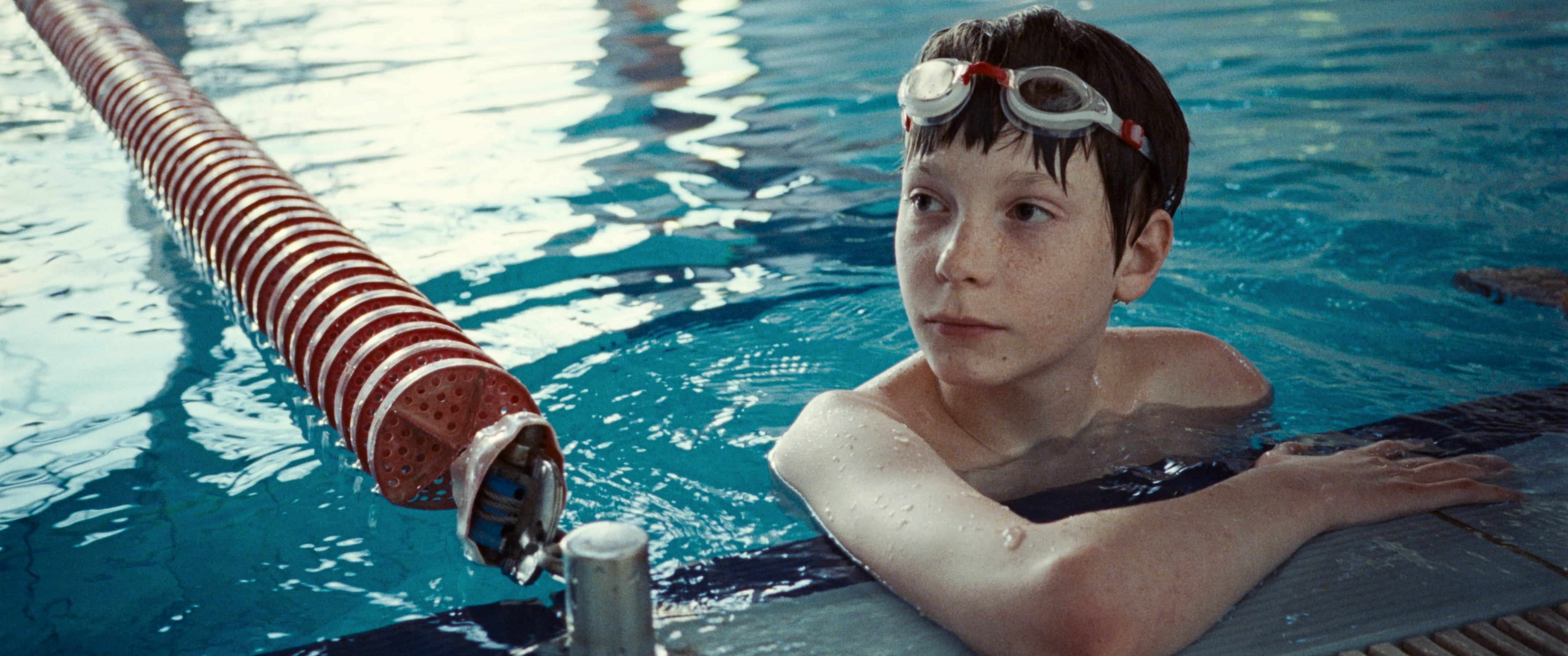
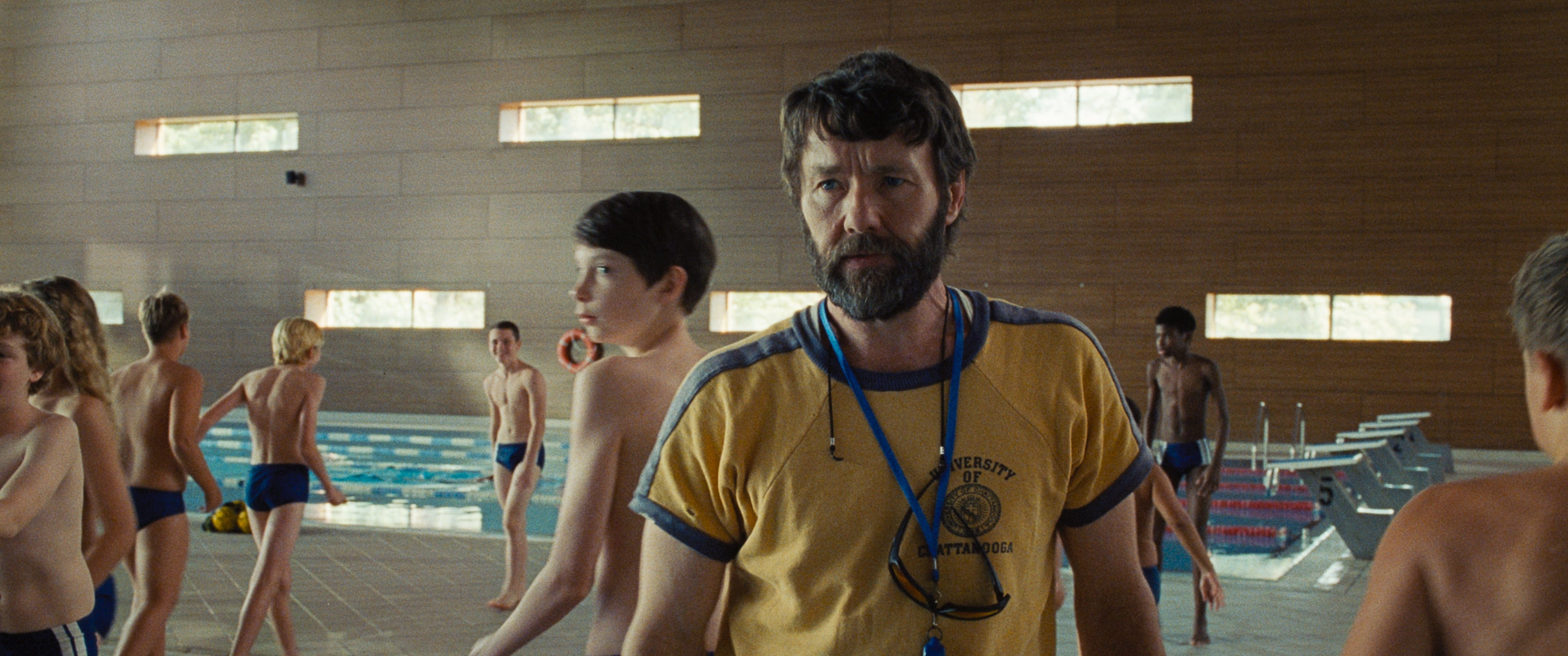
Ben is the new kid at an all-boys water polo camp, presided over by a well-meaning coach (Joel Edgerton). He angles to fit in with the other kids, but grows conflicted when the they viciously shun Eli, an eccentric boy with a skin disorder.
Writer-director Polinger, who drew the germ of the story from memories of his own boyhood, elevates an already scissor-sharp psychodrama with a formidable young cast, led by Everett Blunck and Kayo Martin, while Steven Breckon’s lensing and Johan Lenox’s score drown us in the grasping, gangly dread of pre-adolescence. The Plague is Lord of the Flies by way of Bo Burnham’s Eighth Grade - which is to say, I can’t recommend it enough.
Earlier this week, I had a chance to talk with Charlie Polinger about The Plague. You can watch the full interview below, or read the edited transcript.
It’s my birthday week! 🎂 If you’d like to help me celebrate, consider supporting Underexposed by becoming a paid subscriber. Or, if commitment isn’t your thing, you can always buy me a coffee —
And if you enjoy this interview, please like and share the post. It genuinely helps.
Where to watch The Plague
You can still catch it in select theaters!
VOD premiere on February 3rd - Pre-order now.
News Reel
Announcement! I have officially joined the team at FilmStack Daily Digest as a contributing curator. FSDD is your go-to hub for NonDē filmmaking news and resources. If you’re not yet subscribed, I strongly recommend it.
It’s the Sundance Film Festival’s last year in Park City, and the first since we lost Robert Redford. In The New York Times, Sharon Waxman wonders if this is “The Death of the Indie Film:”
“The media and communication systems of today are going through evolution, and they cannot reflect on themselves.” Mr. Sapan, who now attends Sundance as a producer and film buyer, continued, “There’s a systemic problem here. Art plays a role in surfacing our monsters.” He said, “But right now we are disoriented and destabilized.”
Meanwhile, is international independent film on the rise? A bigger market is emerging for independent films worldwide, reports Stephen Follows: “Almost half of all viewing hours in the US on Netflix happen with subtitles or captions turned on, and a 2022 Preply survey found that 50% of Americans watch with subtitles ‘most of the time’.”
Sundance Now relaunches as algorithm-free home for independent film: “As audiences have more choice and higher expectations, we wanted to showcase a programme hand-selected across all genres by some of the best curators in the business,” explained Scott Shooman, head of AMC Networks’ IFC Entertainment Group.
A conversation with writer-director CHARLIE POLINGER
The following has been condensed and edited for clarity. For the full interview, watch the video here.

Alex Rollins Berg: I cannot tell you how much I love this movie - because I love thrillers and psychodramas, and also because I was a “tween” swimmer. Many years I spent in creepy indoor swimming pools, amongst kids just like in this film, so it really struck a chord for me. What inspired you to write it?
Charlie Polinger: I made a short film that was in sort of a similar world, at a water polo camp. It’s called Sauna. I hadn’t really figured out a way to turn it into a feature-length version. And then during Covid, I was staying with my parents. I caught Covid, actually. I sort of quarantined to my childhood bedroom, and I was cleaning out all my old stuff, and I found these journals that I used to keep. I’d written about this experience at a summer camp, there was this game that we had played called The Plague. I don’t know if a “game” is the right way to describe it, but there was this one kid that we sort of would make fun of - we said that he had the plague. He had really bad skin, and he was kind of socially awkward. I was reminded about this experience in a really visceral way. These memories came flooding back. And I took it from there into something that was more fictional, but it was definitely inspired by something very personal. At first.
Alex Rollins Berg: This is your first feature, is that right?
Charlie Polinger: It is. Yeah.
Alex Rollins Berg: Incredible. I mean, you flouted W.C. Fields’ warnings right out of the gate, and you worked with children. How did you find this incredible cast, and could you share your secrets for getting such amazing performances out of young actors?
Charlie Polinger: I worked with a really amazing casting director, Rebecca Daly. She and I felt it was important to actually get people this age, like 12 to 14-year-olds, and not try to cast older actors because that was kind of the whole concept.
And so to achieve that, we agreed that we had to cast as wide a net as possible. So we basically put out a call for anyone who was interested in auditioning - everyone from people who have been leads in television shows to people who had basically never acted before. Anyone who was interested could put themselves on tape.
So it ended up being thousands of tapes. And Rebecca would decide which role to have them read and would sort them and would pick her selects, but we would scroll through all of them and have, you know, different kids read different roles. Kenny, who plays Eli, was kind of miraculously in maybe like the first ten tapes out of thousands. And we knew pretty much like immediately that he was going to be Eli. It took a while to find the perfect Jake, and I actually discovered Kayo [Martin], who plays Jake on Instagram and saw these videos of him skating and going around New York. You may be seeing the New York Nico stuff.
And so it was different for everyone. You know, they were just already so perfect for the roles, and they were all so dedicated to doing a good job that it kind of made my life easy and I feel like my biggest thing was to kind of create the environment and create the mood so that they could really just like, go for it. And we would just mess around and just try to make it feel really real and alive and energetic. To me, that’s the same process I think I would have with any actors.
Alex Rollins Berg: And you shot it on 35-millimeter. Did that sharpen everybody’s focus?
Charlie Polinger: I’d say that it does sharpen the focus, because all of us are so aware that you roll out pretty quickly, you only get a few minutes before you have to change the mag. And the fact that it’s so expensive every time that we’re shooting anything. So, I think that when you would start to call action and you hear it rolling, everyone would really lock in. We would really rehearse things and try to make sure that the camera moves and the blocking felt very figured out, even if that took a longer amount of time out of the day. And then from there, we would try to save the film for getting to play around with the performances, sometimes even keep it rolling and do it a few times in a row, let it kind of flow into something new. Yeah, I think it’s totally different.
Alex Rollins Berg: It’s really a high wire act, because I would imagine that working with kids that were not that experienced, and getting them loose in front of the camera might work at cross-purposes with shooting on film, which is like, you know, “time is money” with these roll-outs happening so frequently. So it’s really impressive what you were able to pull off.
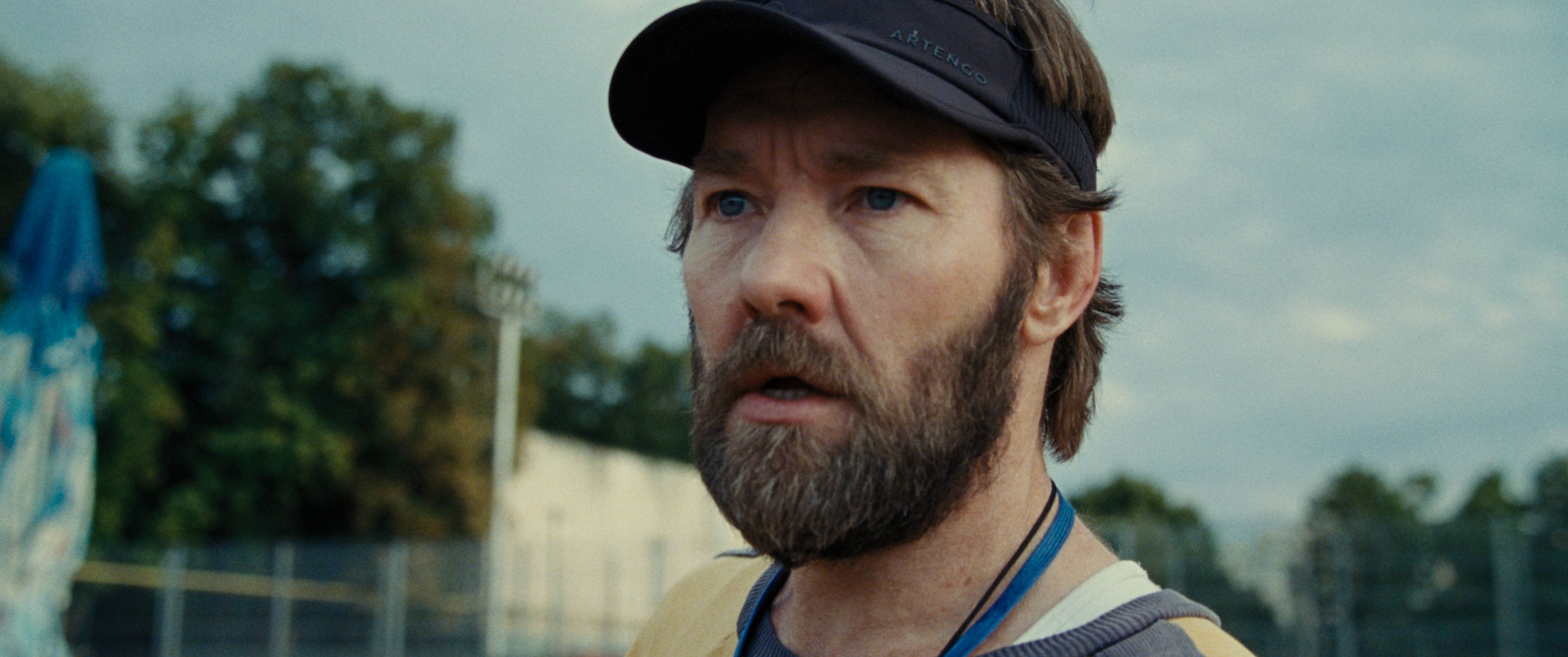
Alex Rollins Berg: I want to ask about Joel Edgerton. He plays the coach, he’s a producer. I know that he expressed interest initially to direct, which makes a lot of sense because I absolutely love his movie The Gift. I think there’s a lot of thematic overlap there. Tell me about getting him involved in what he taught you while making this movie.
Charlie Polinger: An agent of mine sent him the script, just sort of having a hunch that Joel would respond to something like this. And he asked, oh, is someone attached to direct? And I was able to meet him and say, “It’s really important to me that I’m directing this, but I’m really thrilled that you liked it.” And he said, I totally get it. I still would love to help you make this movie and help as a producer. And I could play this role of the coach, if you’d like. It was pretty amazing. Joel is so talented at acting, but also at writing, directing and producing. And I think he cares so much about getting more movies out into the world that he’s excited to be involved in.
And so in this case, I think he just felt like he wanted the story to be out there. He’s aware that something like this is really hard to find the financing for. And by getting involved, it really helped us.
Alex Rollins Berg: To prep for this movie. I understand that you watched some war films. Which war films in particular spoke to you, and what did you take from them?
Charlie Polinger: We watched as many as we could. We were looking at Come and See, which is one of the best - an incredible performance from a young boy, going through a very intense experience. The Cranes Are Flying, Full Metal Jacket, of course, and Apocalypse Now and Platoon - they have these groups of men in these claustrophobic spaces together, where they’re going through an intense experience and group dynamics form. And so pretty much every war film that we could watch was really relevant in some way.
Alex Rollins Berg: So this movie is set in 2003, which I think is so smart because I think it sidesteps that tendency to blame casual cruelty solely on social media. I mean, it’s an eternal truth, right, as we see in these war movies, and we’ve seen in your film. In light of what happened last weekend - not to get too political - what are the kind of conversations that you would hope people might have after seeing a film like The Plague?
Charlie Polinger: I would hope that it just creates conversations about what creates dynamics within groups. A group can be an entire culture, or a society, or a group can be five or six people. Often there’s an attempt to connect through choosing who’s the outcast, and the way that that can create dynamics where many people want to belong so badly, that they’ll push their values to the side just to belong. And I think that’s how cruelty is bred. That can lead to someone feeling so torn up, that they’re pushed to a darker place themselves. And I think that all those cycles and patterns to me on a very individual human level are just really interesting to explore.
That’s all of the free edition of Underexposed. Paid subscribers get access to the full transcript of the conversation, as well as a bonus video, in which Charlie Polinger shares his Underexposed Movie Pick.
