
What if it never grows back?
After years of IP monocropping and algorithmic blight, culture is growing fallow. Here's how we might seed something new.
“It is no measure of health to be well adjusted to a profoundly sick society.” - Krishnamurti
In a healthy ecosystem, art and commerce thrive together. Commerce feeds the arts, the arts invigorate culture, and culture enriches us all - spiritually and financially.
For more than a century, the United States sustained the most dynamic creative ecosystem on the planet. Artists and capitalists joined forces to produce music, dance, literature, television, comic books, technology, and, of course, Hollywood movies - products that generated trillions of dollars worldwide, while establishing the U.S. as the beating heart of mass culture.
But over the last few decades, a strange blight has crept over the landscape. Commerce has become bloated and belligerent, while art has withered on the vine. Moguls who once cultivated culture now salt their own fields, and the landscape has grown leached and barren.
In a recent YouGov poll, Americans rated the 2020s as the worst decade in a century for music, movies, fashion, TV, and sports. In The New York Times, Jason Farago lamented that we live in the “least innovative, least transformative, least pioneering century for culture since the invention of the printing press.”
How did it come to this? How could the land of Ella Fitzgerald, Alvin Ailey, Mark Twain, Madonna, Stanley Kubrick, Bob Dylan, Aretha Franklin, Katharine Hepburn, Clint Eastwood etc, etc, etc, etc, allow its culture to shrivel and die?
Is the old ecosystem just collateral damage from the attention-shredding internet? Or is something else at play?
Slather on some bug spray - we’re off to conduct a field study. Let’s survey a few of the afflictions plaguing American culture, then explore what it might take to revive it.
Underexposed is a weekly ad-free film publication, funded by an unruly band of readers like you. If you want to support the future of cinema appreciation and movie-going culture, consider upgrading to a premium subscription for exclusive essays and videos.
Slash and burn
We don’t know where John Rolfe acquired his tobacco seeds. Possibly in the Caribbean, where he and his crew were shipwrecked before settling in Virginia. By 1618, he was exporting forty thousand pounds of tobacco a year. As plantations multiplied across the Chesapeake lowlands, planters slashed and burned forests into nutrient-rich ash. After three or four harvests, the nutrients were spent, and the scorched and barren plots were abandoned.
In a bountiful “new world,” this slash-and-burn ethos seemed acceptable. It was also fiendishly profitable - so much so, that it stalked the young nation across the frontier and back, through one frenzied, ill-fated gold rush after another - right up to the present day.
Hollywood, once a bustling dream factory, has gone eerily quiet lately. Just 63 percent of available sound stages were rented in 2024, down from a steady 90 percent or higher just a few years ago. For some time now, tax credits and lower production costs have lured productions away from California, to states like Georgia. But get this - Georgia’s production work is now vanishing. In 2022, 16 movies were shot in scenic Savannah. This year? Three.
Central Europe has emerged as the latest Hollywood production hub, accounting for over $1 billion in production spending last year - particularly in Hungary and the Czech Republic. Now, there are whispers of even cheaper hands further east, closer to active war zones. Greener pastures, amiright?
Of course, those pastures will be scorched soon enough. By then, the infinite digital frontier of AI will have rendered hands, pastures, and the humans who worry about them obsolete.
That’s the hope of today’s slash-and-burners, anyway. But is it ours?
Potential Remedy: Soil Restoration
Industries locked in a slash-and-burn race to the bottom tend to burn themselves out. Without major antitrust intervention, it’s hard to see how the current studio system avoids that fate. It’s already halfway down Big Tech’s gullet. Sure, they’ll keep hacking up a couple of lifeless tentpoles every year, but the talent and labor that once fed the industry will be smoldering charcoal. Unless…?
If we want a vibrant movie culture, we need to rethink how we grow it. That means nurturing a wide, unruly garden of films at sane budgets and - radical thought - actually paying the people who make them enough to live. One bright idea: offer cast and crew real backend participation, shifting them from disposable field hands to dignified landowners. Audiences can be invited in, too. Eli Roth’s fan-investment model at The Horror Section shows what a future film ecosystem could look like. Marketing and infrastructure remain challenges, but the creator economy is already preparing the soil, and smart policy - retooled tax credits, U.S. versions of Europe’s public film funds - we could coax a new strain of cinema into bloom.
If we plant something worth growing and tend it with care, the whole culture will eat better for years to come.
Invasive species
In the 1980s, a sneaky little hitchhiker slipped across the Atlantic in a freighter’s ballast tank. The zebra mussel landed in the American Great Lakes, and began reproducing at aggressive rates, sucking up plankton and starving native species.
Meanwhile, back on land, another invasive species was on the rise. Private equity firms were burrowing into every sector, restructuring companies for leveraged returns. Corporate America pivoted from long-term value creation to short-term cash extraction.
Hollywood wasn’t invaded until the mid-2000s, when dot-com dealmakers like Ryan Kavanaugh of Relativity Media started luring Wall Street to invest millions in diversified Hollywood “slates.” With returns projected to top 18%, capital flowed, and lender protections (such as limits on marketing budgets) relaxed. Historically, studios leaned heavily on revolving lines of credit from banks, but by Q4 of ‘06, all the major studios had secured private equity backers for at least one of their slates.
Then came the 2008 financial crisis, followed by the vaporization of the DVD market. As streaming platforms ascended, movie profit margins cratered - and Wall Street decided risk would be algorithmically neutralized. The industry retreated into formulaic franchise filmmaking guided by software that claimed to identify hits and dodge misses.
Meanwhile, mergers surged. As mega-deals like WarnerMedia-Discovery, Amazon-MGM, and Disney-Fox consolidated power under ever-fewer corporate umbrellas, bargaining power for talent and smaller firms dried up. Priorities shifted from quality storytelling to vertical integration, while wages in the unregulated wilds of streaming could be driven ever lower - great for quarterly spreadsheets, terrible for the long-term health of the industry.
Potential Remedy: Inoculation through regulation
Private equity now controls an estimated $13 trillion. Reining it in wouldn’t be easy. But just as citizens and agencies have mobilized to contain zebra mussels to save precious waterways, voters and lawmakers can demand real oversight: ending preferential tax treatment and holding firms liable for the debts they load onto their portfolio companies.
In film, meaningful improvements could come from simply reviving old safeguards. The 1948 Paramount Decree once prevented studios from owning the entire pipeline; a modern version could cap consolidation, unwind mega-mergers, and restrict studios from exploiting the distribution platforms they now control. We could also resurrect the old FinSyn rules for the streaming age, compelling platforms to license more work from independent producers rather than owning everything they distribute. Talent would flourish, competition would return, and the creative ecosystem would breathe new life.
IP monocropping
In the early twentieth century, government incentives coaxed homesteaders to the Great Plains to plant wheat “as far as the eye could see.” Monocropping - growing a single crop on the same land year after year - made harvesting easy and efficient. It also degraded the soil, making it vulnerable to wind erosion. When a drought choked the region in the 1930s, strong winds blew away the topsoil, creating black blizzards - a devastating, decade-long ordeal known as the Dust Bowl.
Today, Hollywood seems to be courting a similar catastrophe.
The 2010s were bumper crop years for IP-driven franchises. Superheroes grew so tall that they began to monopolize talent and screen space. Once-beloved commodities like costume dramas and rom-coms got muscled out of rotation. Thor roared, and the topsoil blew away.
Quantity also eroded. From 1995 to 2009, the major studios pumped out about 112 theatrical releases a year. From 2010 to 2023, that number slid to 83 - a decline that coincided with (ahem) corporate consolidation. Fewer studios meant fewer movies - and more IP monoculture.
But lately, winds have been stirring. Superheroes aren’t saving the day like they used to. Variety warns the genre has entered an “unprecedented box office drought.” The wider IP well is also running dry. Meanwhile, Hollywood seemingly forgot how to make and market the other kinds of films that used to fill up theaters. When they do sporadically drop a mid-budget drama or a good-old comedy, the audience doesn’t show up. They’ve been conditioned not to bother.
Potential Remedy: Crop Rotation
In the words of Bill Bratton: Hollywood needs to fix its broken windows. Theatrical releases that appear on streaming platforms 17 days later are tanking box office returns. Cinema United chair-CEO Michael O’Leary recently demanded a 45-Day exclusive run:
“We need a system that recognizes our common goals and does not pit one sector against another in a short-sighted quest for immediate financial return at the cost of long-term success.”
New players must enter the field, and bold, original visions need to be cultivated - the IP of tomorrow! At the same time, audiences will need to rekindle an appetite for new and unexpected movies, and actually sometimes maybe watch them in a movie theater.
Warner Bros. (RIP?) proved it’s possible this year with an impressive run of hits - many of them original stories, or at least fresh IP. If Hollywood wants to bring its soil (and revenue) back to black, it needs to rotate those crops.
Algorithmic Blight
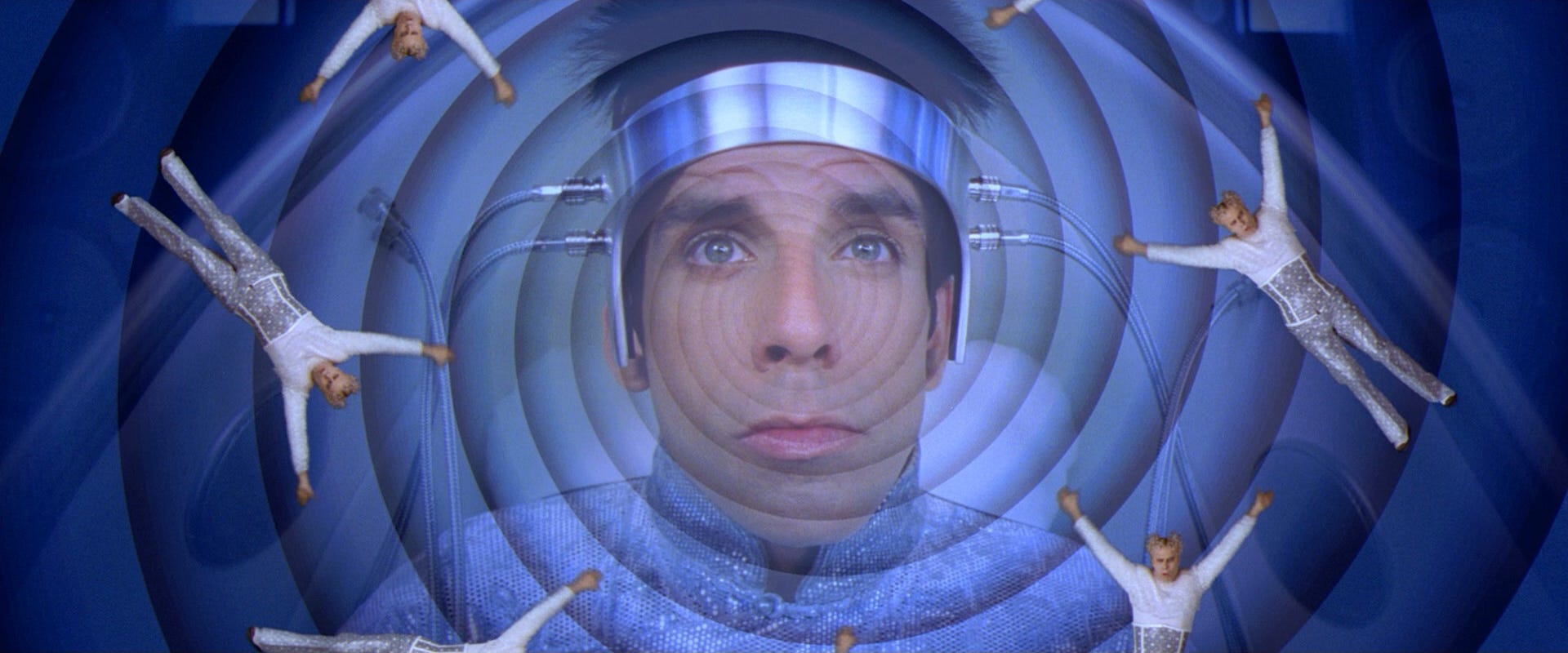
In the ancient world, lead was the king of metals. Even after the Romans discovered that overexposure to lead caused madness, memory loss, and sometimes death, they kept using it - so fond were they of its many everyday uses.
Today, we’re clinging to our own low-grade toxin. Overexposure to algorithm-driven content - and now, large language models - has been linked to cognitive decline and a medley of psychological disturbances. But merrily, we scroll along.
Algorithms have changed the way audiences engage with movies. Stories that formerly served to illuminate the human condition now serve culture-war point-scoring. Zealous online militias canonize mediocre films that flatter a narrative, while tarring those that don’t. When a film fails to deliver exactly what audiences expect, the blowback can be frightening. The result is safer, blander movies.
Over the past decade, we’ve seen the rise of the so-called algorithm film: flat, easy-to-follow gloss, reverse-engineered from user data to be half-watched while browsing infinity scarves on Etsy. We’ve also seen the decline of audience attention - as competing screens and platforms have flooded the zone. And when attention becomes “overfished,” the loudest and least-demanding “content” tends to dominate, leaving little room for slow-growing, culturally valuable work to break through.
Potential Remedy: Exit the Algorithm
“Markets don’t discipline tech companies because they don’t compete with rivals, they buy them,” Mark Zuckerberg once said.
If the market won’t spank these brats, who will?
Technology has the capacity to improve our lives in wonderful ways. Cultural curation is not one of them. Railing against Big Tech can feel almost farcical, like yelling at a black hole. But it must be done - keeping in mind it’s not the tech that’s the issue, but those who wield it to undermine creative labor, strip down cultural industries, and upwardly redistribute ill-gotten cultural wealth.
Just as wildlife corridors reconnect isolated populations, we too can “rewild” our movie watching. AMC has introduced “Screen Unseen” on Monday nights, where audiences buy discounted tickets to watch a mystery movie. Screenings are consistently full here in New York, and reddit fan communities have sprouted up. Nuanced film conversations are flourishing on Substack. Underexposed is just one of many voices advocating for movie lovers to resist the suck of the algorithm, and seek serendipity.
“Culture is the intersection of people and life itself. It’s how we deal with life, love, death, birth, disappointment... all of that is expressed in culture.” - Wendell Pierce
By envisioning culture as a living ecosystem, we can better identify the threats, and begin to restore its fertility. The good news: Every day now, more people are waking up to the damage these platforms have inflicted on our culture. Social media engagement is declining fast: Instagram has dropped 24 percent year-on-year, and even TikTok’s heat has cooled. Meanwhile, concerned parents are joining a national bipartisan movement to ban smartphones in schools. Just this week, Republican Governors are revolting against the regime’s commitment to block all regulation of AI for the next decade.
In her book Silent Spring, Rachel Carson laid bare the chemical industry’s destructive practices, prompting an unprecedented wave of federal intervention. Carson spoke about “the obligation to endure” - a belief that the future of life is worth protecting. If our captains of industry refuse to protect us, then we in steerage will have to step up. We’ll have to remember the words of Margaret Mead: “Never doubt that a small group of thoughtful, committed citizens can change the world; indeed, it’s the only thing that ever has.”
We are not lonely grubs. We are part of a larger ecosystem. And it’s time to stop scrolling and start stewarding it.
News Reel
“The logic of algorithms tends to repeat what works, but art opens up what is possible,” said the Pope to an assembly of Hollywood actors and filmmakers at the Vatican this week. “More than a few people are saying that the art of cinema and the cinematic experience are in danger. I urge institutions not to give up, but to cooperate in affirming the social and cultural value of this activity.”
Maybe we’re not so divided? A new Kettering Foundation-Gallup Poll shows that Americans agree on many democracy-related matters. “There is broad support for the democratic ideals of nonviolence, compromise, multiculturalism and freedom of expression — key principles that underpin free, democratic and civil societies.”
What is a producer? Career producers have joined forces through Producers United to battle for credit, cash, and a little goddamn respect. “We protect the artistry and the artists, and we maintain the quality, and that’s our job,” explains Lorenzo di Bonaventura, a former top executive at Warner Bros. Pictures. “What happens when we’re not here anymore?”
Filmstack Challenge entries are rolling in. Check out this one from
and this from .
And now, today’s Underexposed Movie Pick:
Woyzeck (1979, Werner Herzog)
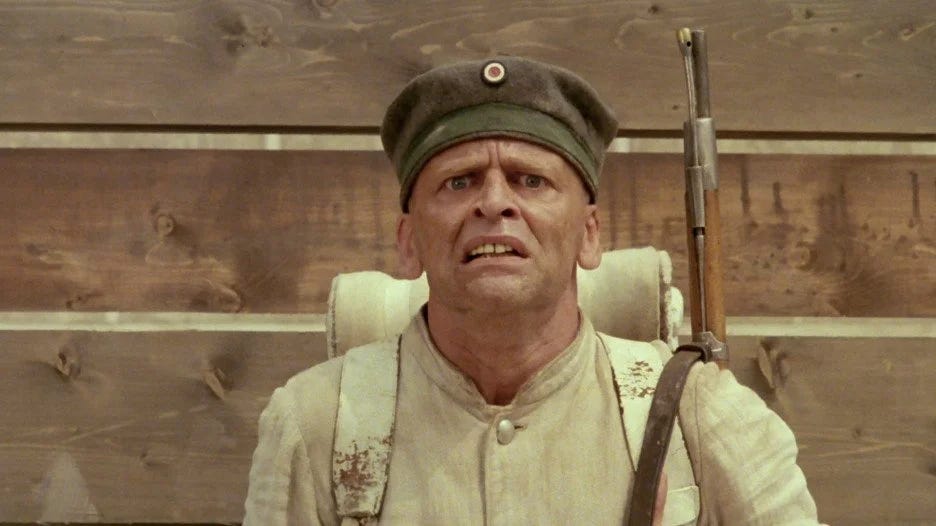
“Us common folk, we don’t have virtue. We do what comes naturally,” a twitchy Woyzeck (Klaus Kinski) tells his Captain while shaving the man’s throat. “Yes, if I was a gentleman with a hat and a watch, I would like to be virtuous. Must be a fine thing, that virtue, Captain.”
Franz Woyzeck is a low-ranking soldier posted to a drab provincial garrison in mid-nineteenth-century Germany. At home, he supports an illegitimate child with his mistress, Marie. To keep his small family afloat, Woyzeck submits to a parade of humiliations: he runs petty errands for the Captain, endures the man’s moralizing lectures, and even hires out his own body to a doctor, who subjects him to bizarre medical experiments in the name of science.
The filming of Woyzeck commenced only five days after Herzog wrapped Nosferatu the Vampyre with the same exhausted cast and crew. Kinski made many legendary films with Herzog, including Fitzcarraldo and Aguirre, the Wrath of God. “It is almost impossible to imagine Kinski without Herzog; reflect that this `unforgettable’ actor made more than 170 films for other directors–and we can hardly remember a one,” wrote Roger Ebert in his review.
I read Georg Büchner’s unfinished play years ago, but somehow I’d missed the Herzog film until this week, when Criterion Channel dropped a Herzog cache. I’ve seen a handful, but there are still embarrassing gaps. If you’ve got recommendations on what I should dive into next, leave them in the comments so I can pretend I discovered them on my own.
Where to Watch Woyzeck
Now streaming on the Criterion Channel.
Also on Tubi.

That’s all for this week. Thanks for reading.
See you next Friday,
Alex
Wonderful essay, Alex. Thanks for sharing your amazing insights and perspectives -- and helping us be aware of the water in which we are all boiling.