
Disney Trash Cinema
In the ’70s and ’80s, live-action Disney movies were shaggy, offbeat, and bizarre.
I’m going to Disney World!! No, really.
Three generations of my family are preparing to march into the great damp blast furnace of Central Florida to battle the fleshy hordes in pursuit of Mickey’s magic.
I have a deep, abiding love for Disneyland in California, but have not set foot in Disney World since the 1990s, back when my sister and I were tikes. Now that she has two kids of her own, we’re all rolling south to mint some fresh family memories.
My niece and nephew have never been to a Disney park, and possess only a dim awareness of the classic Disney characters - a credit to their parents’ screen-time restrictions. In my childhood, Disney was inescapable. Even before the animation renaissance kicked off by The Little Mermaid, Disney flooded suburban America with puffy white VHS clamshells. Some housed masterpieces like Snow White, Peter Pan and Fantasia; others contained lesser-known live-action titles of the 1960s, ’70s, and ’80s - movies that even the most obsessive Disney freaks have likely forgotten.
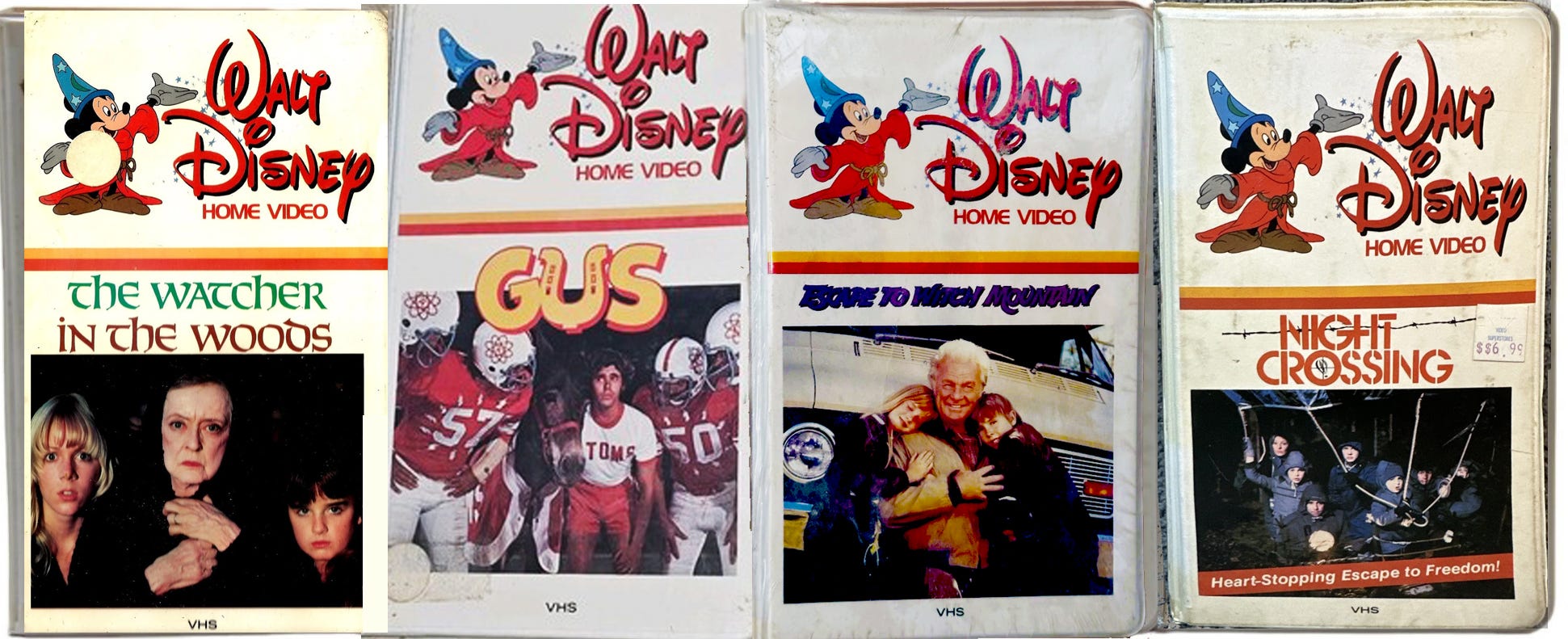
Once upon a time, Disney released a steady stream of deeply peculiar films involving cursed automobiles, telepathic children, demonic circuses, wealthy occultists, wisecracking animals, and body-swapping galore. These movies replayed for years on Disney’s Sunday Night Movie, a staple of my early years. As films go, they may not have been “great,” or even “good,” but they were the next best thing: strange. And so today, we salute them here on Underexposed.
How did these demented titles make it through the Disney machine in the first place? And in today’s reboot-driven marketplace, are these forgotten “legacy assets” ready for a reboot - or should they be left alone?
Let’s raid the Disney vault and exhume some of their quirkiest oddities.
Underexposed is a weekly ad-free film publication celebrating great underseen cinema and moviegoing culture. Paid subscribers get exclusive essays, videos, and more - while supporting the future of movie culture.
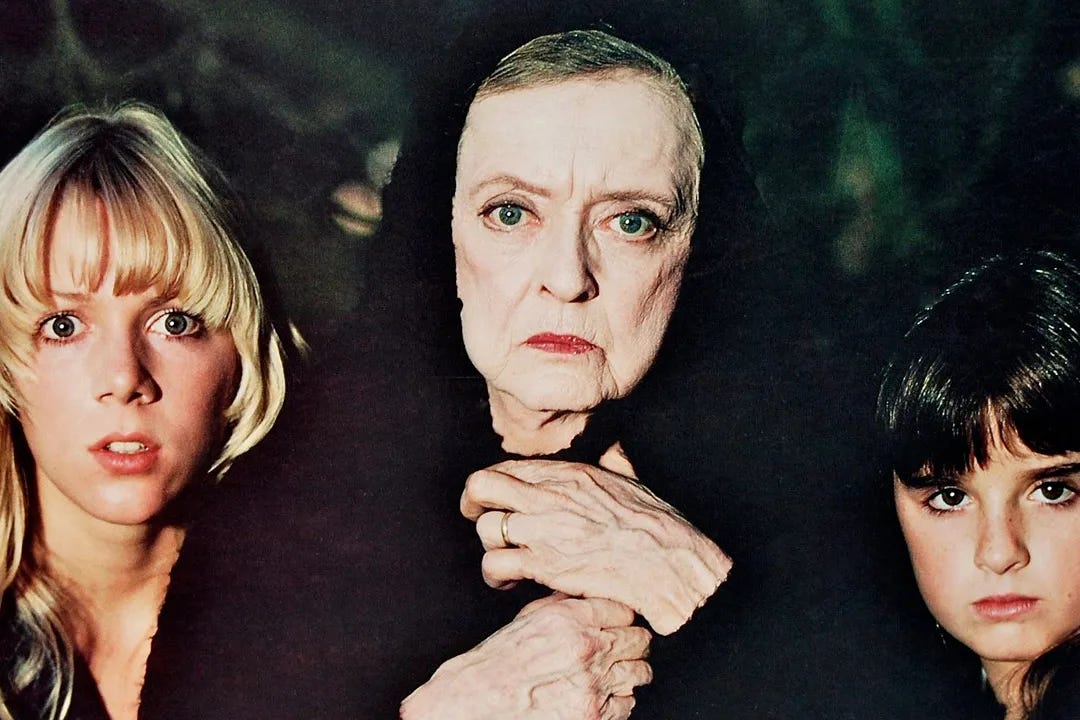
The Watcher in the Woods (1980, John Hough)
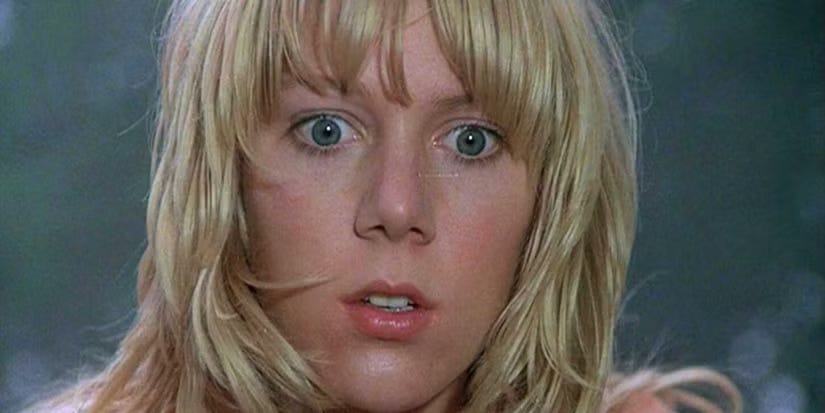
When a family moves into a remote English manor overseen by the enigmatic Mrs. Aylwood (Bette Davis), sisters Jan and Ellie begin seeing eerie lights and hearing ghostly voices in the surrounding woods. Their visions may be tied to the long-unsolved disappearance of Mrs. Aylwood’s daughter, who vanished years earlier during a sinister, cult-like ceremony.
“This could be our Exorcist,” producer Tom Leetch pitched Disney executive Ron Miller (Walt’s son-in-law) after optioning Florence Engel Randall's 1976 mystery novel, “A Watcher in the Woods.” It was the late ‘70s, and Disney was angling to capture an older audience. A horror movie seemed like a good move. They even hired a proven horror director, John Hough (The Legend of Hell House).
The twelve-week production was troubled from the start. Miller and other Disney suits kept sanding down the darker elements, growing skittish about just how frightening a “Disney horror movie” was allowed to be. The ending was reworked multiple times, even after the film had already premiered in theaters - resulting in a flimsy final act. Despite its compromises, The Watcher in the Woods remains one of Disney’s darkest curios, a flawed but fascinating relic. You can still find it on DVD.
Monkeys, Go Home! (1967, Andrew V. McLaglen)
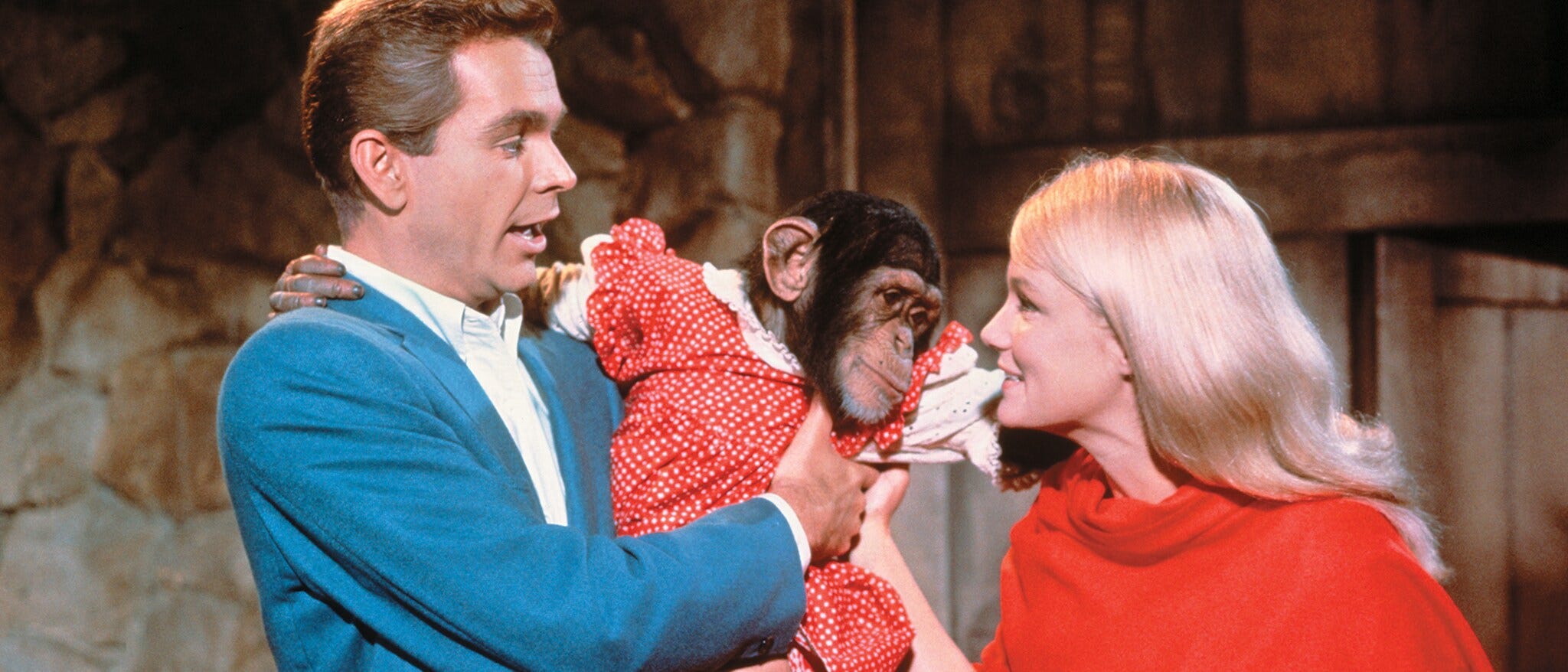
Two months after Walt Disney’s death in 1967, the company honored his legacy by releasing Monkeys, Go Home!, a comedic celebration of cheap, non-union labor starring actual chimpanzees. When Hank Dussard (Dean Jones) becomes the new owner of an olive grove in the south of France, he hires chimpanzees as olive pickers, who turn the place upside down with their shenanigans.
Based on the novel - yes, novel - by G.K. Wilkinson, Monkeys, Go Home! was filmed on Burbank backlots and leftover sets from the Zorro TV series. If “monkeys learn to pick olives” strikes you as a peculiar hook for a movie, you’re not wrong - it’s deeply strange. But that didn’t stop Disney from embarking on more quirky monkey comedies. Years earlier, the science fiction comedy The Misadventures of Merlin Jones featured Stuart the monkey, who returned for a sequel, The Monkey's Uncle. Then there was the bizarre 1986 space-comedy Hero in the Family, in which an astronaut and a chimpanzee accidentally switch brains during a space mission. Should Disney dare to revive any of these properties, perhaps an entire cinematic universe is in order - a zany offshoot of Planet of the Apes, perhaps?
Something Wicked This Way Comes (1983, Jack Clayton)
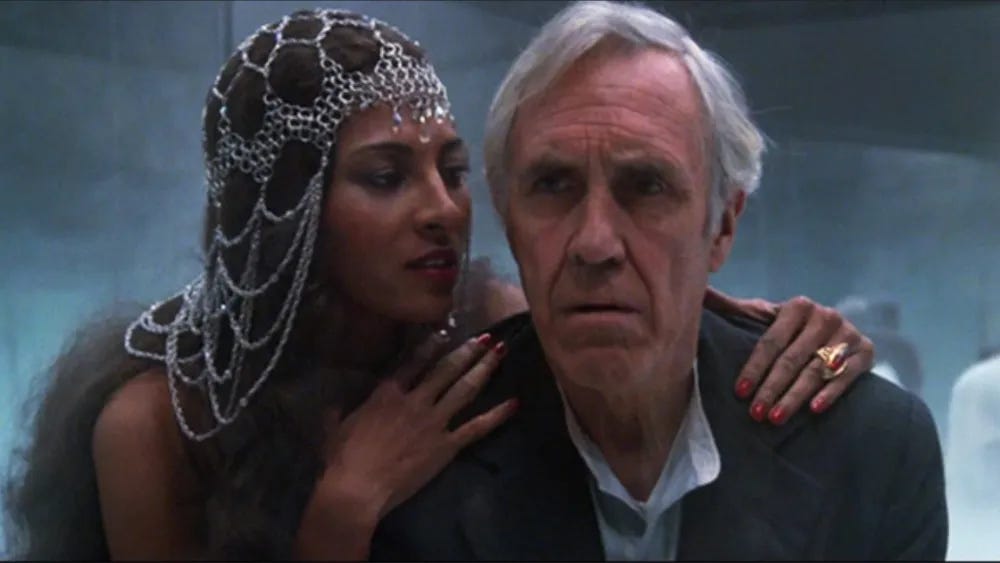
In the early ‘80s, as Disney was dabbling in darker movies for grown-ups, they picked up a long-gestating Ray Bradbury script, based on his 1948 short story “Black Ferris.” Originally developed for Gene Kelly, then Kirk Douglas, Something Wicked This Way Comes attracted the attention of directors like Sam Peckinpah and Steven Spielberg before landing with distinguished British director Jack Clayton, known for his literary adaptations of Henry James and F. Scott Fitzgerald.
Starring Jason Robards, Jonathan Pryce, and Pam Grier, Something Wicked is a dark fantasy horror film about a diabolical circus and its demonic ringleader, Mr. Dark, who preys on a small town’s children. Despite its exceptional atmospherics and cast, the film met a similar fate to The Watcher in the Woods. Clayton was sidelined and the film was reshot extensively. One of the cut scenes, which depicted a supernatural train, would have been the first-ever CGI sequence in a movie.
Roger Ebert gave the movie a glowing three-and-a-half star review, calling it “a strange hybrid of craftsmanship and lyricism… a horror movie with elegance.” Audiences were less enthusiastic. A box office disappointment, Something Wicked dropped from public memory for decades, but recently popped up on Disney Plus. In 2014, Disney announced a remake helmed by Seth Grahame-Smith, but it has yet to materialize. Should it?
The fun continues below. But first, the news:
News Reel
“Letterboxd is for sale! Let’s buy Letterboxd!!” So say Elizabeth Joyce and Ted Hope, who spy a rare opportunity to build a better future - for film lovers, by film lovers: “As much as they would like it to be otherwise, cinema is not a subset of tech – and we can make efforts to ensure it no longer will be. Companies don’t have to be slaves to profit or shareholders. Companies can value public benefit and all their stakeholders – and that is the possibility we now have before us with Letterboxd. We can stop it from landing in the enshitification slide before that virus takes hold.”
There Are Many Ways to Shoot a Personal Story. Max Cea speaks to the cinematographers of Blue Heron and Bunnylovr about technique, collaboration, and why they relate to actors.
A Panicked Hollywood Can Make Indie Film Stronger: “Hollywood hasn’t been at the forefront of anything. It’s always been reactive—and reactionary—playing it safe, threading the needle, trying to avoid anything that will turn away one of its quadrants or investors. And the more corporations, stockholders, and debt is in the mix, the more watered down it will be. And the more that alternative forms of media will rise.” - Anthony Kaufman.
“In 2014, when she was nearly 80 years old, the poet Mary Oliver wrote a short poem titled ‘Instructions for Living a Life.’ It goes like this:
Pay attention.
Be astonished.
Tell about it.It sounds simple. But paying attention is in fact one of the most challenging and meaningful things you can do. Because what you pay attention to shapes what you care about. And what you care about shapes who you become.” - Jon Haidt in his NYU graduation speech, Treasure Your Attention,
This week’s Underexposed Movie Pick:
Silent Friend (2025, Ildikó Enyedi)
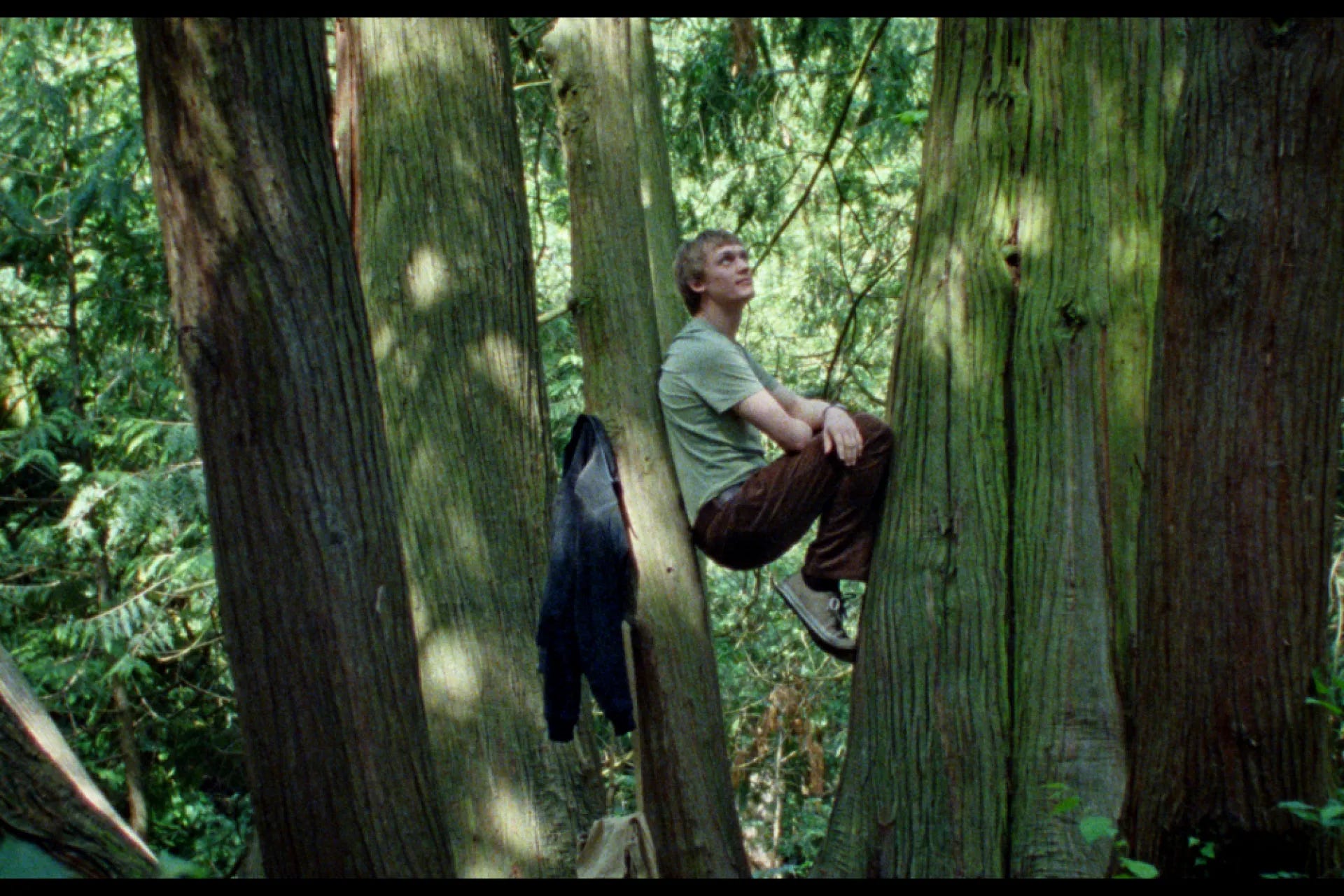
What if I told you that one of 2026’s most enchanting and original films stars a century-old gingko tree? In Silent Friend, Hungarian director Ildikó Enyedi threads three stories across time into a hypnotic meditation on communication - between people, and with the natural world. A lonely Hong Kong neuroscientist reaches out to a French colleague, whose theories about plant-human communication fascinate him. A young student persuades her bohemian crush to participate in an unusual flower experiment. The first woman admitted to a botany program endures a brutal entrance exam, and triumphs. Shadows stretch. Bows creak.
The cinematography by Gergely Pálos maintains a steady spell, even as the film shifts between 35mm, 16mm, and digital to distinguish its different eras. Premiering at the Venice Film Festival, where it won the FIPRESCI Prize, Silent Friend is now mesmerizing audiences in select theaters. You’d be wise to seek it out this weekend.
Where to watch Silent Friend
Now playing in select theaters
That’s all for the free edition. Coming up for paid subscribers: Telepathic twins. Sean Astin’s Goonies follow-up, written by the creator of The X-Files. And the only film on this list that absolutely deserves a reboot. Plus - this week’s Off the Shelf.
